Type lab, a typographic laboratory by Vincent Lesne
Mona Sans · wdth 75–125 · wght 200–900
A laboratory for looking at letters far too closely — to dissect them, generate them, deform them. In code, with AI, by hand.
- Anatomy of a Letter
- Le Bateau ivre
- Il pleut
- Jelly type
-
The Ampersand Test
-
Beowolf 2026
-
Été, Noël, cœur, ÇA
Anatomy of a letter
A lowercase g, dissected from outline to bone. The anatomy isn’t modelled by hand: it is generated from the letter’s own drawing — distance field, skeleton, ductus — and would work on any glyph. Then the type terms are taken literally: the eye gets an eyeball, the ear a cochlea, the loop a heart beating at 62 bpm. You open it with a scalpel, in real time.
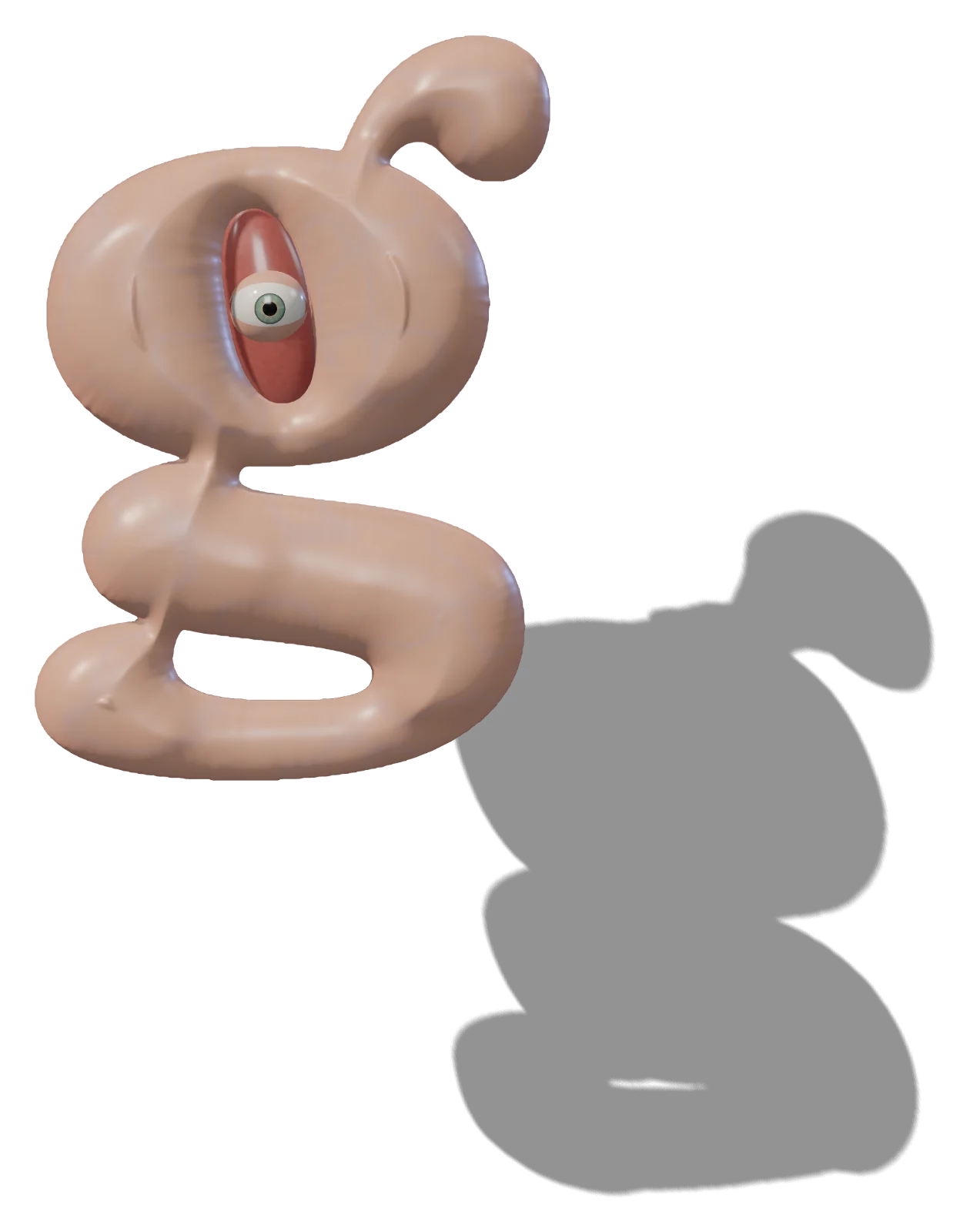
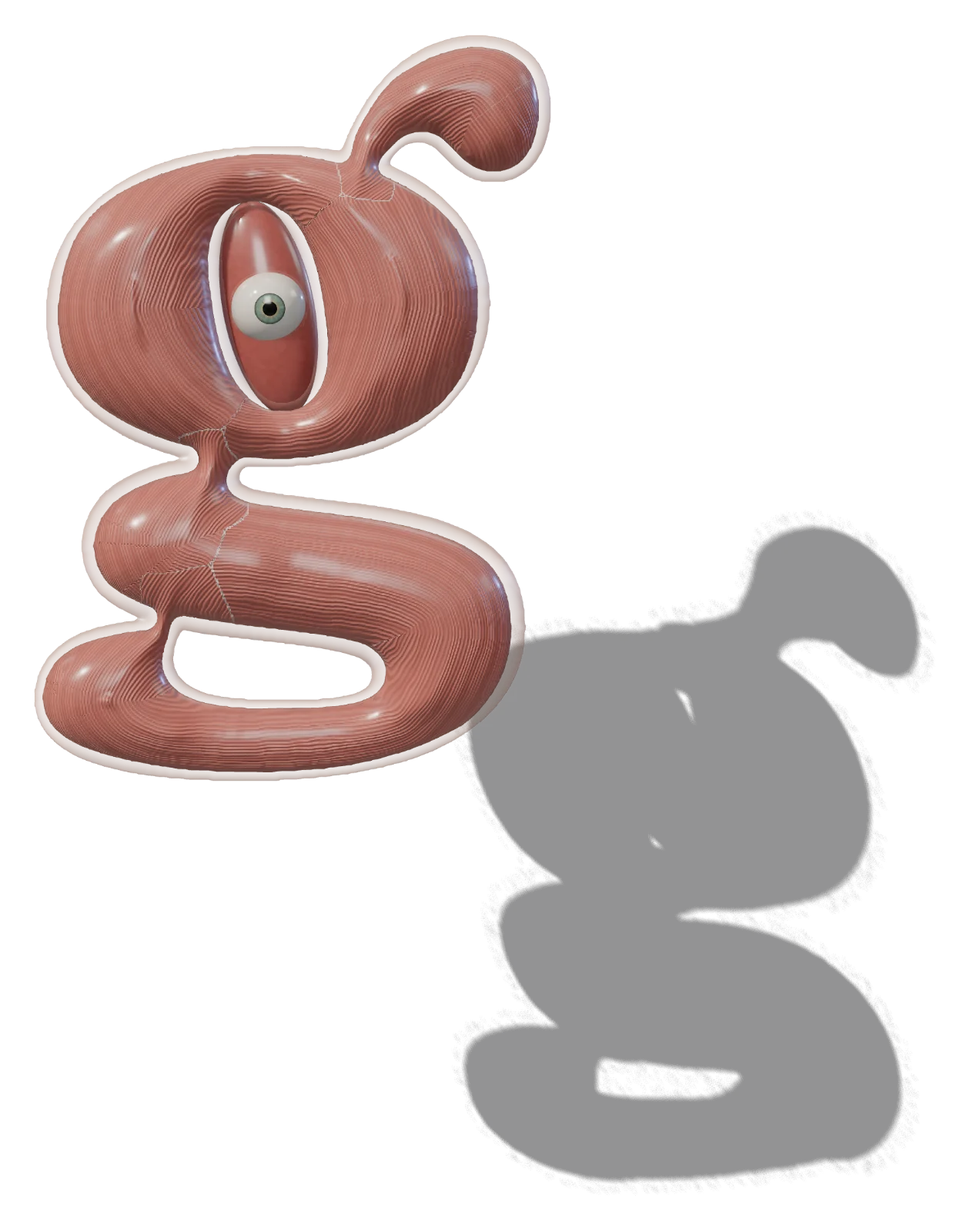
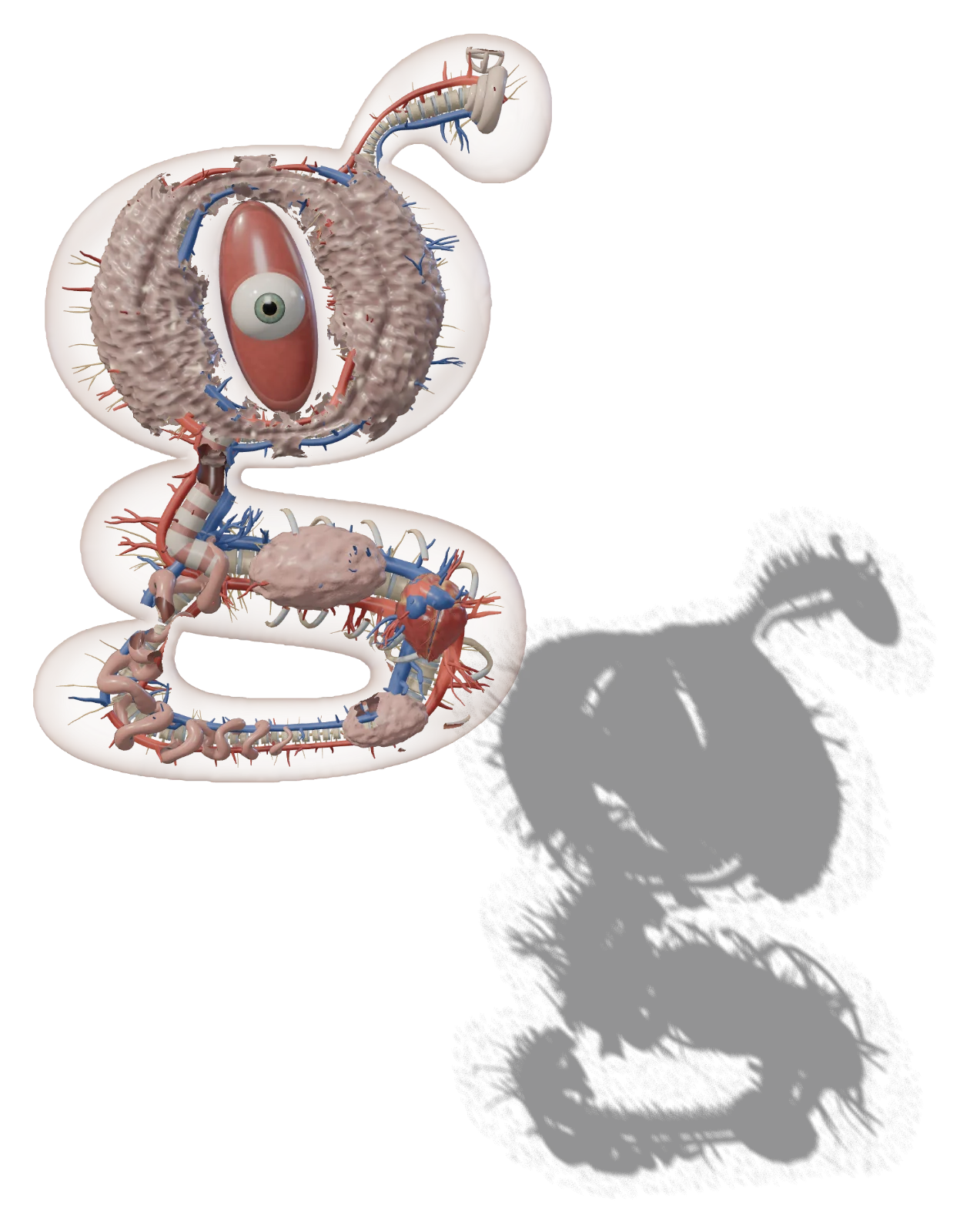
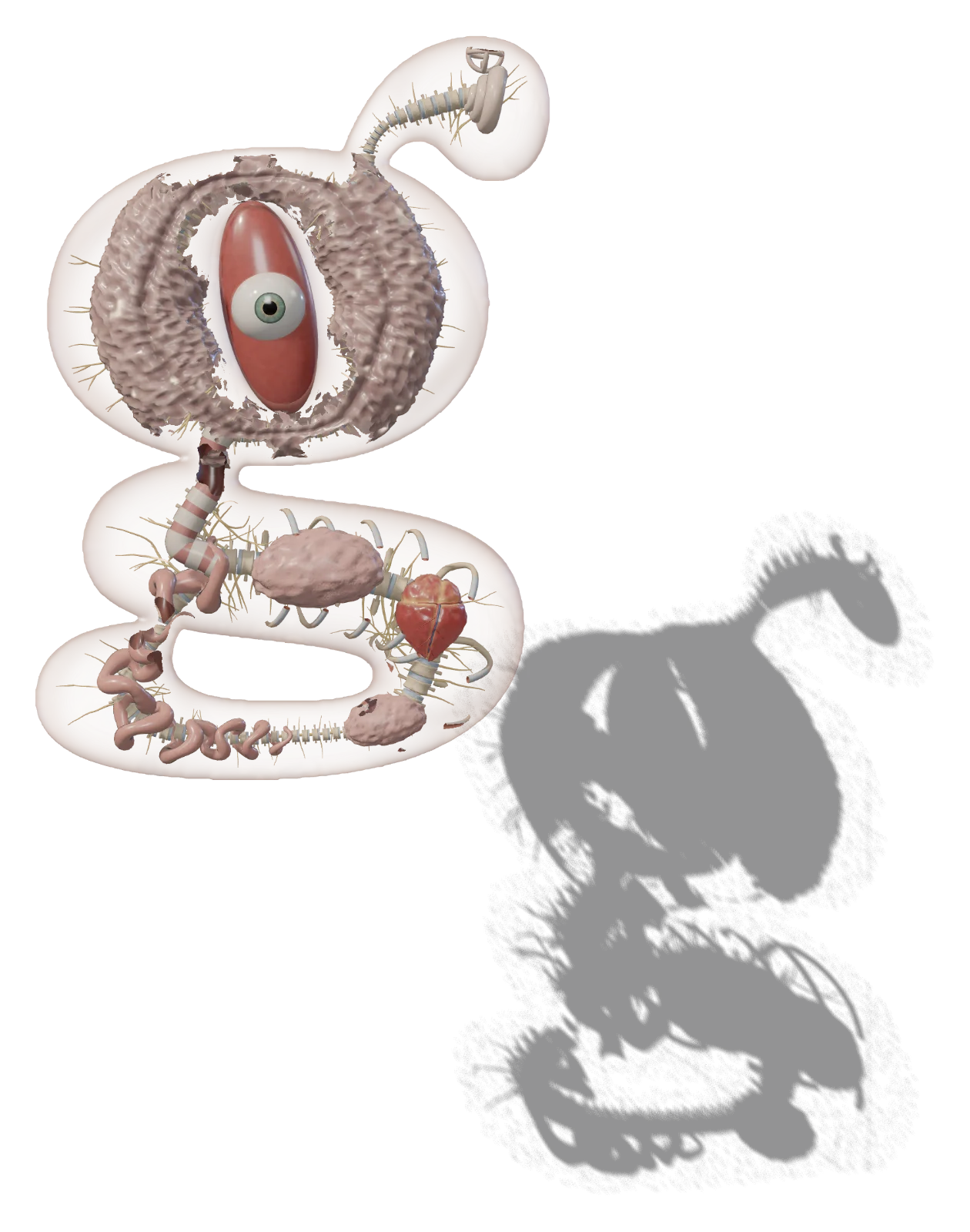
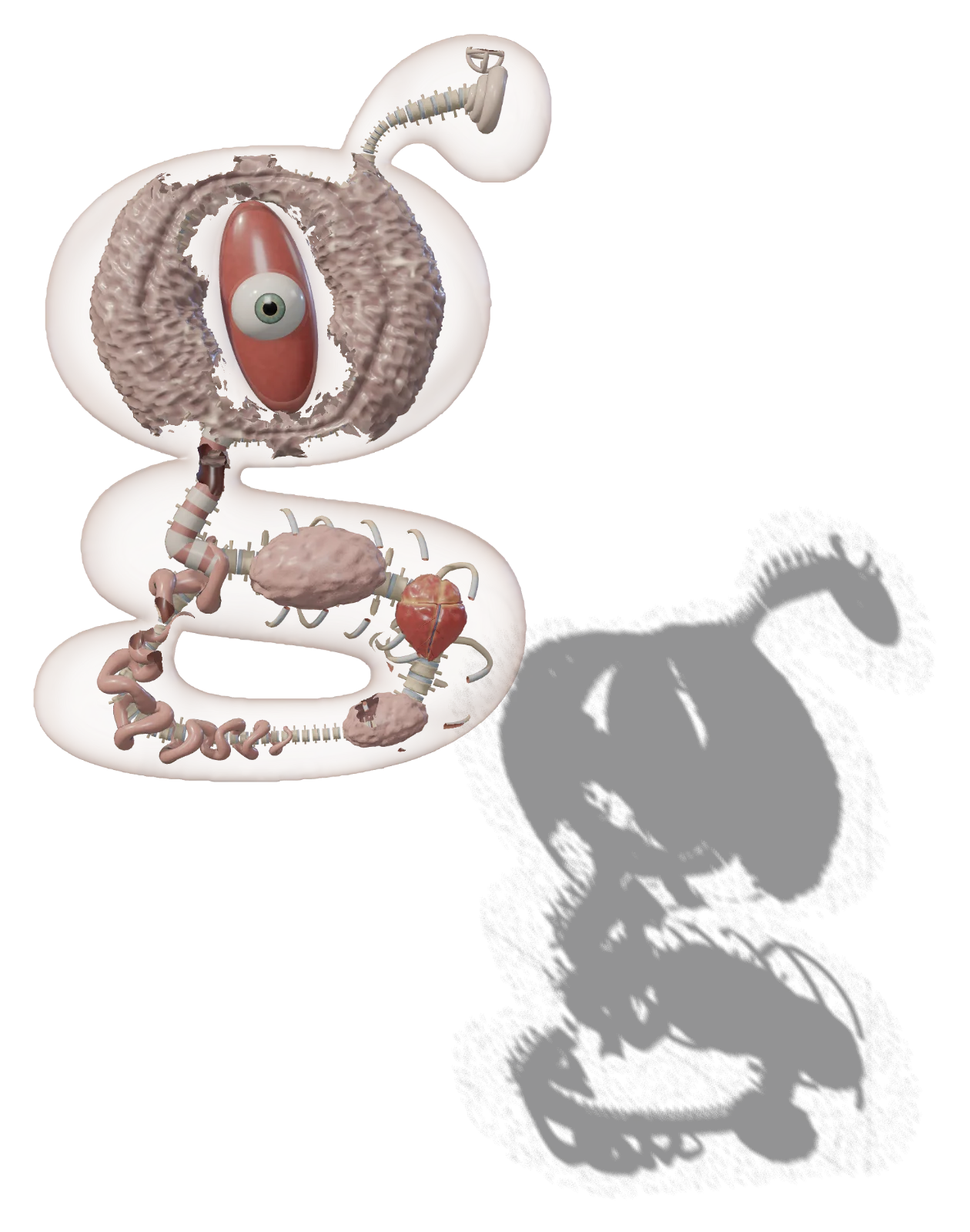
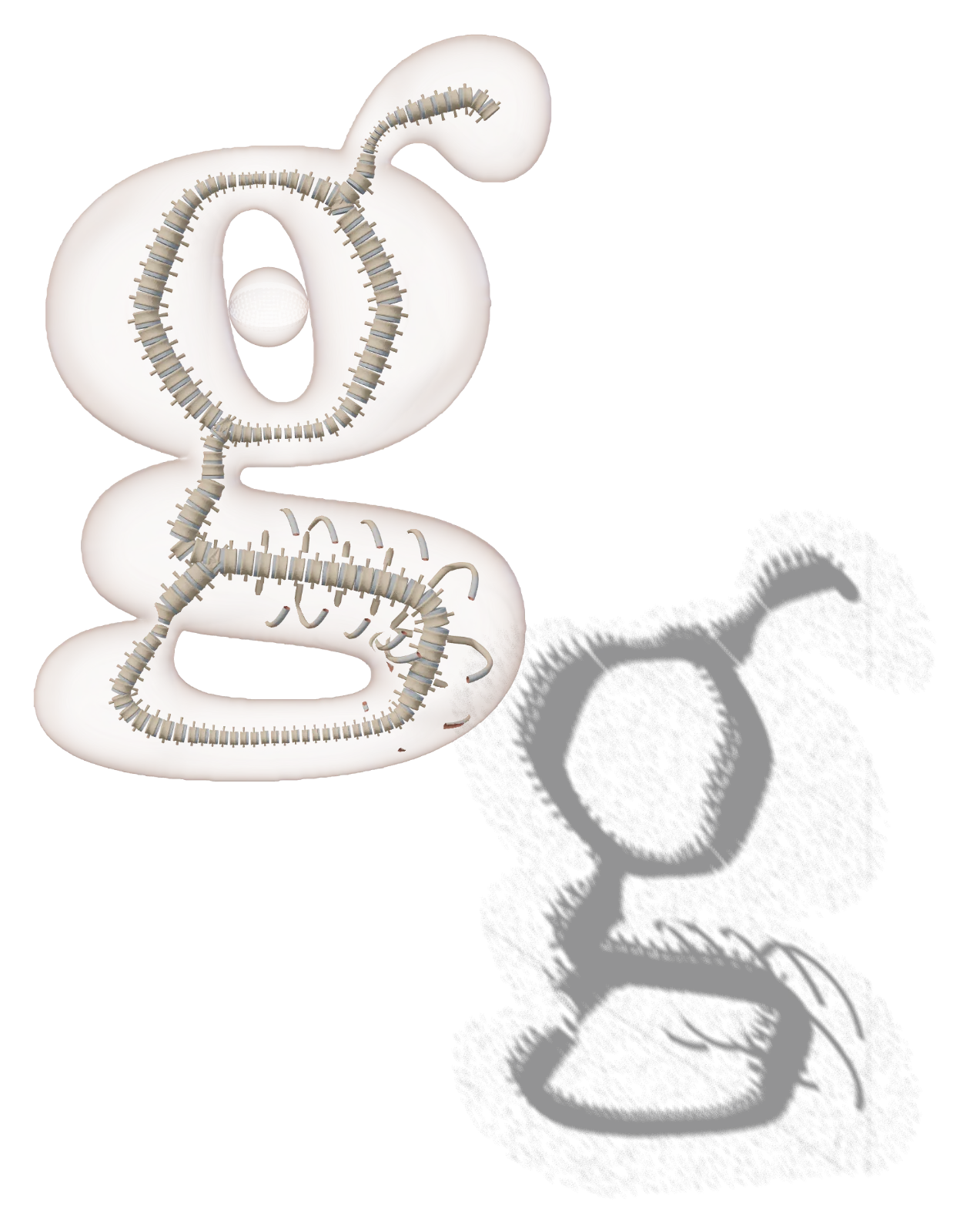
Three.js · distance field · surface nets · 6 layers · real time
Le Bateau ivre
Rimbaud’s hundred alexandrines, set as a poem whose lines are the sea. Every letter is a variable of the font; the words act out what they say, a paper boat drifts across the stanzas, and the page takes on water. Green water rises at the fifth stanza, colour arrives in watercolour washes, the storm turns the page to black, the maelstrom winds the lines into a spiral — and the poem ends in a black puddle, where a child sets down a boat as frail as a May butterfly. You go down the river by scrolling.
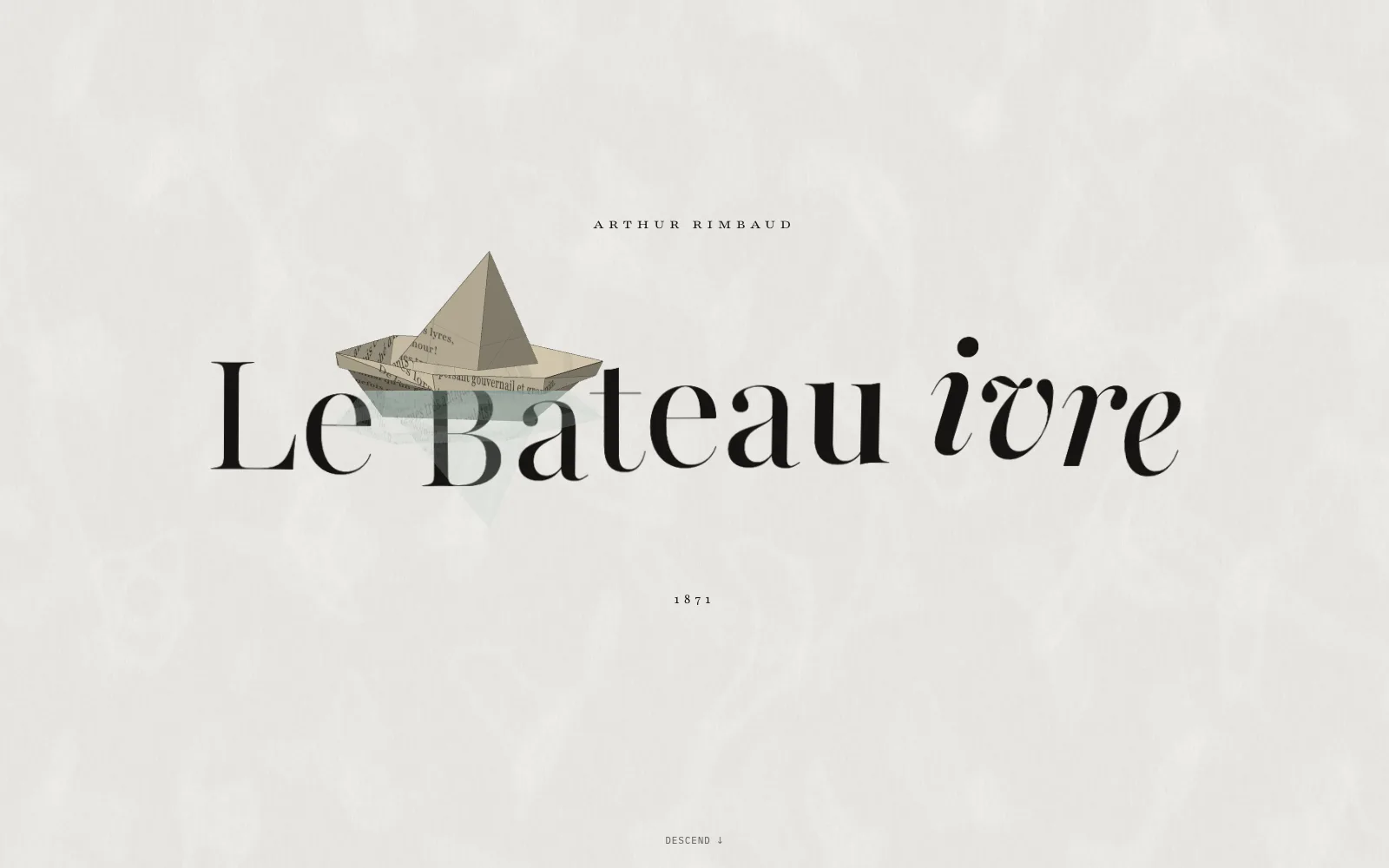
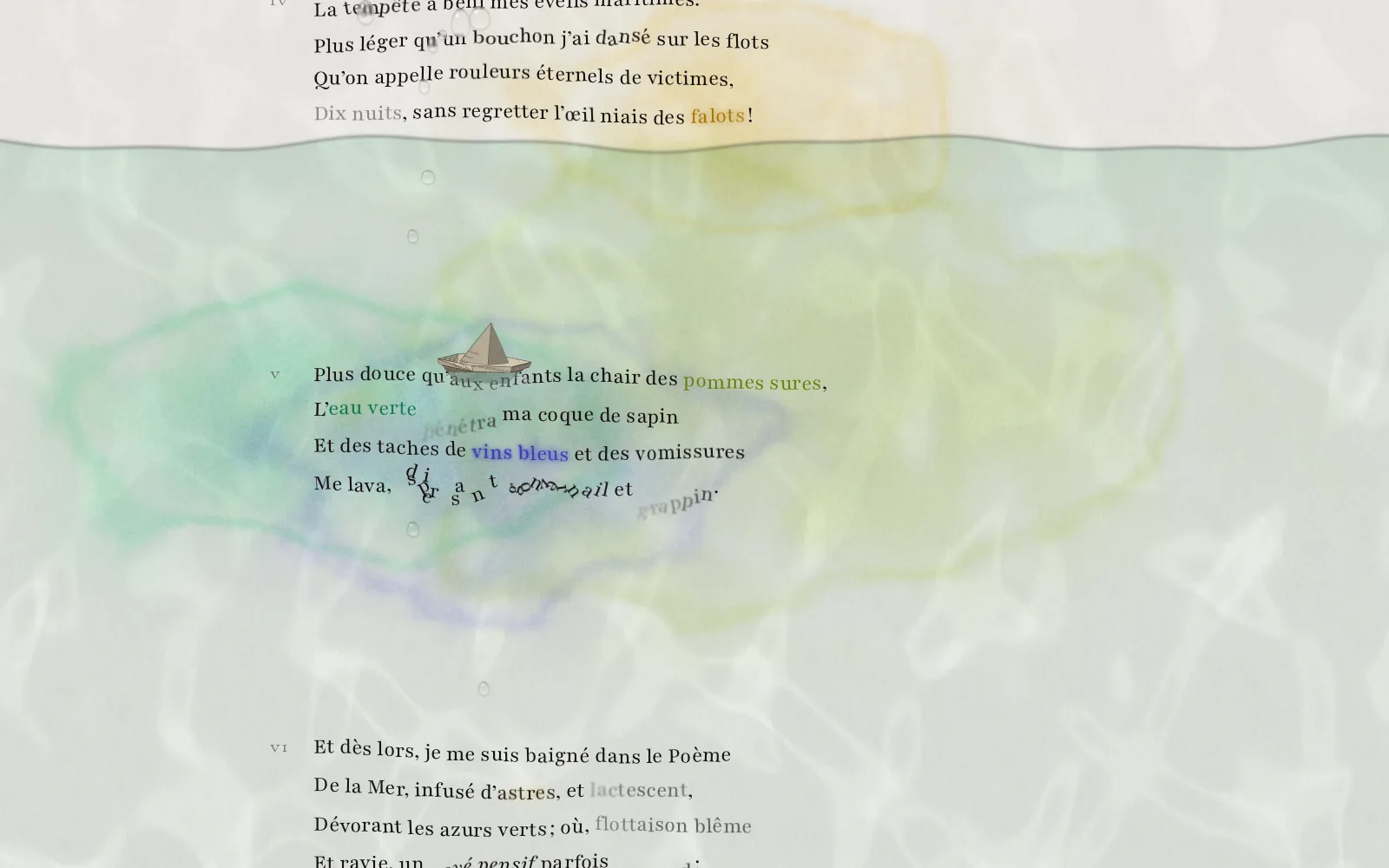
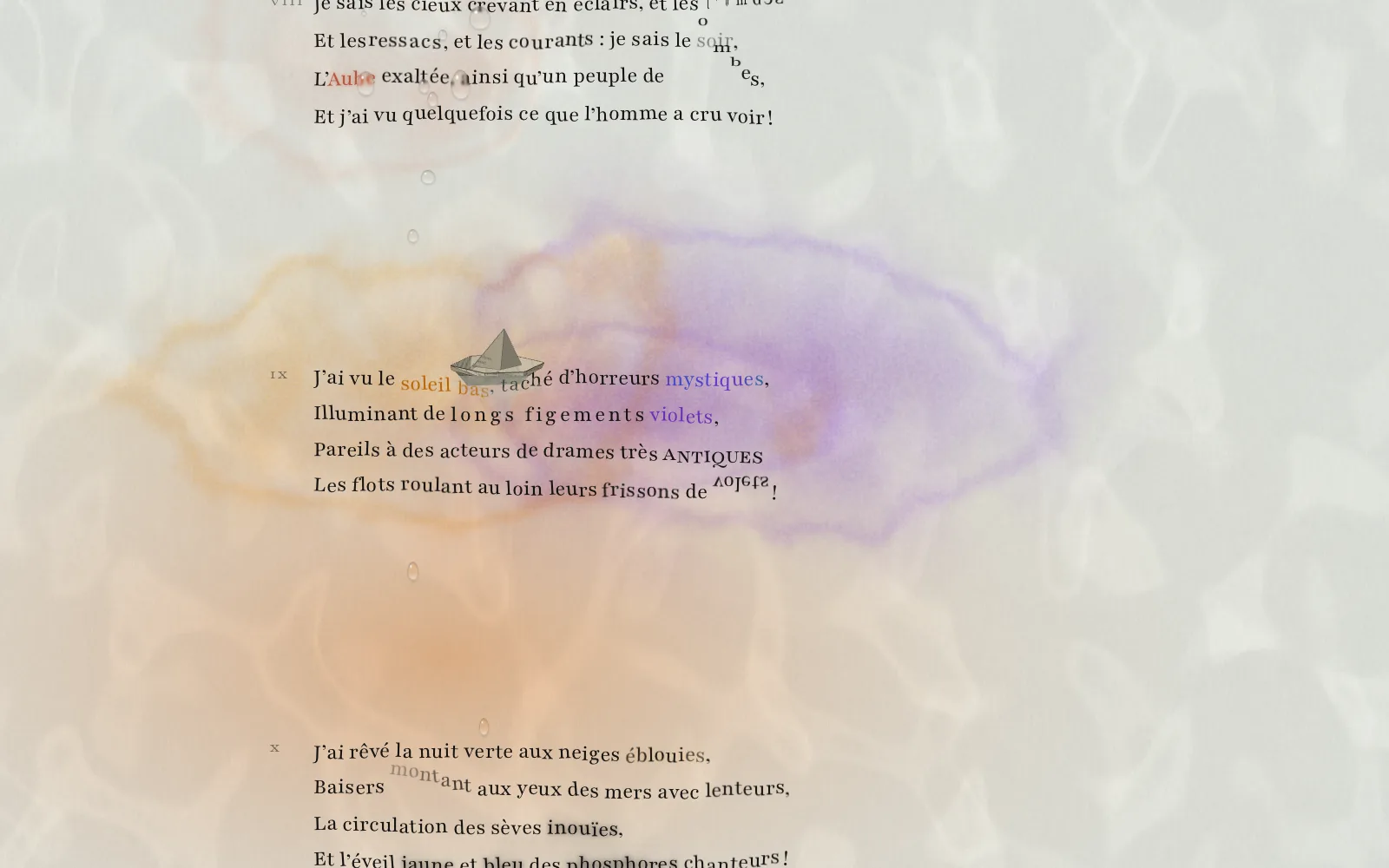
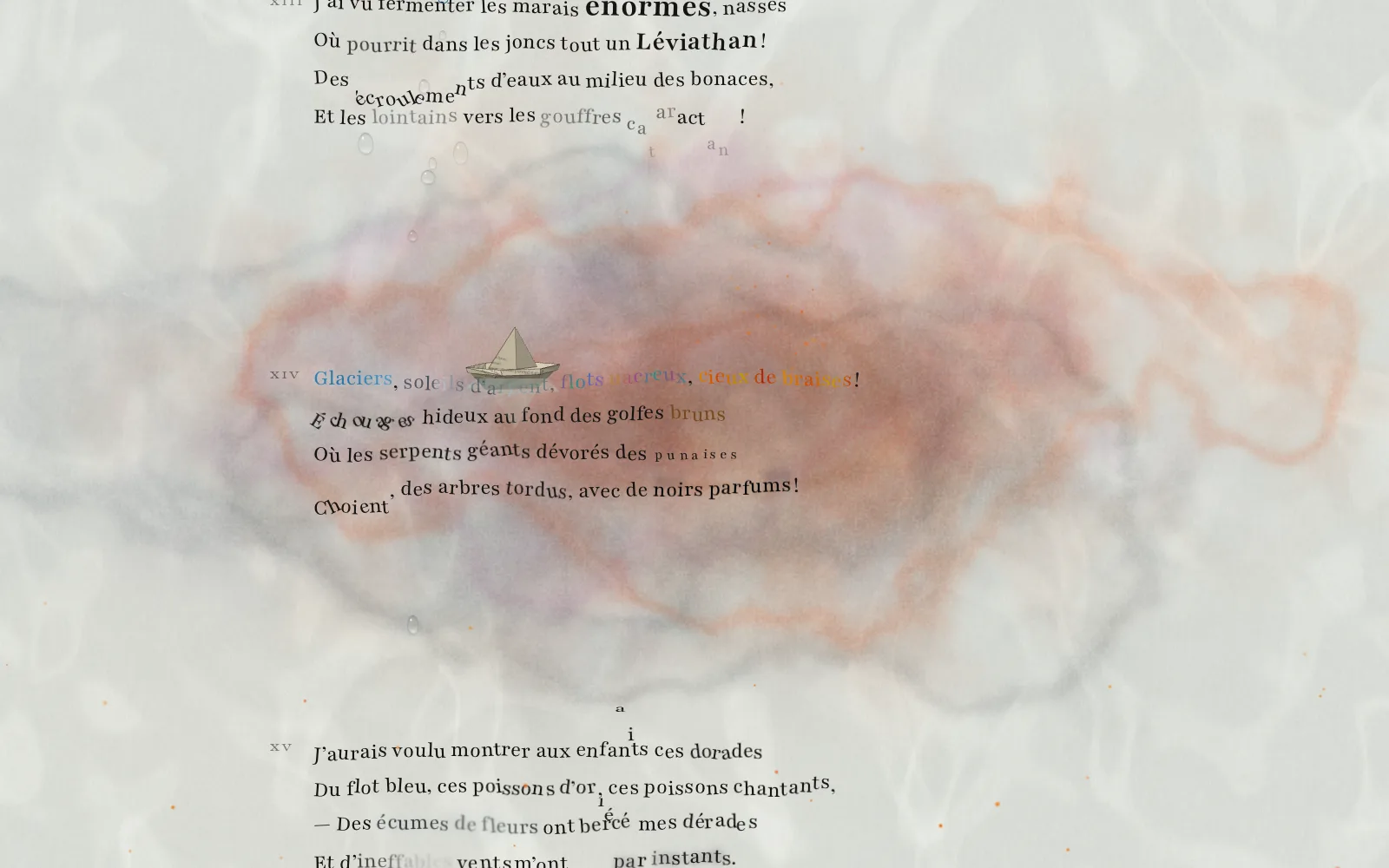
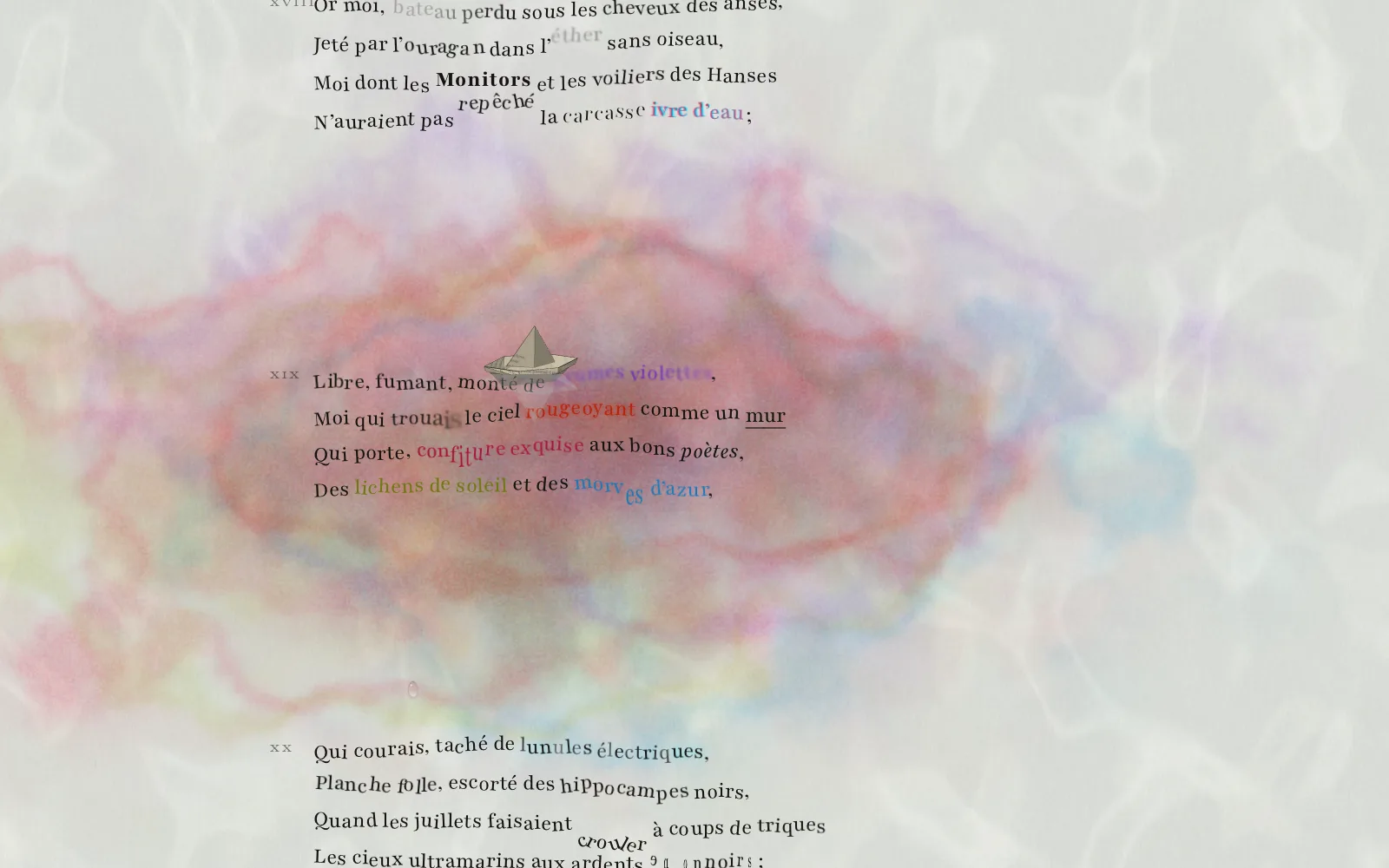
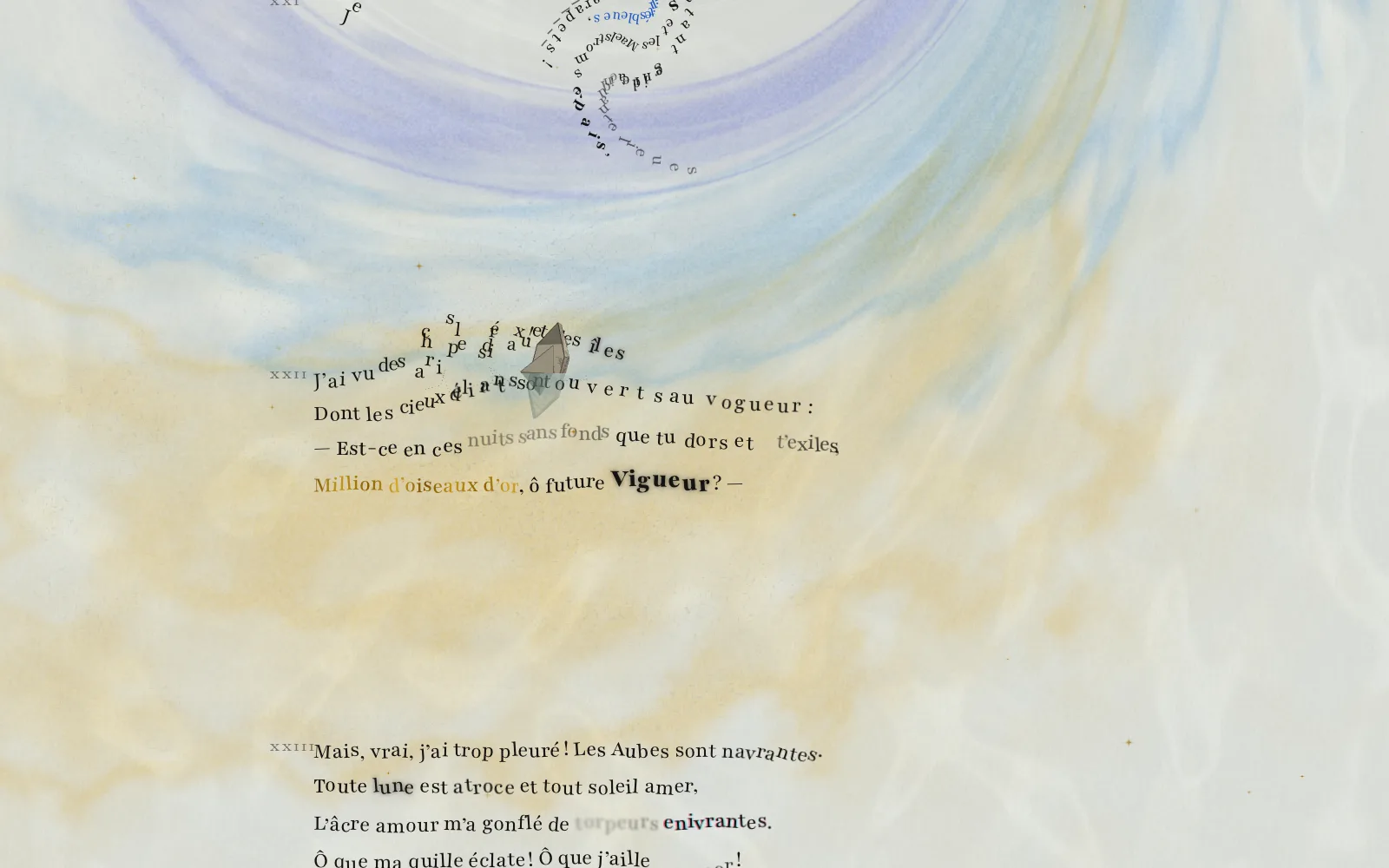
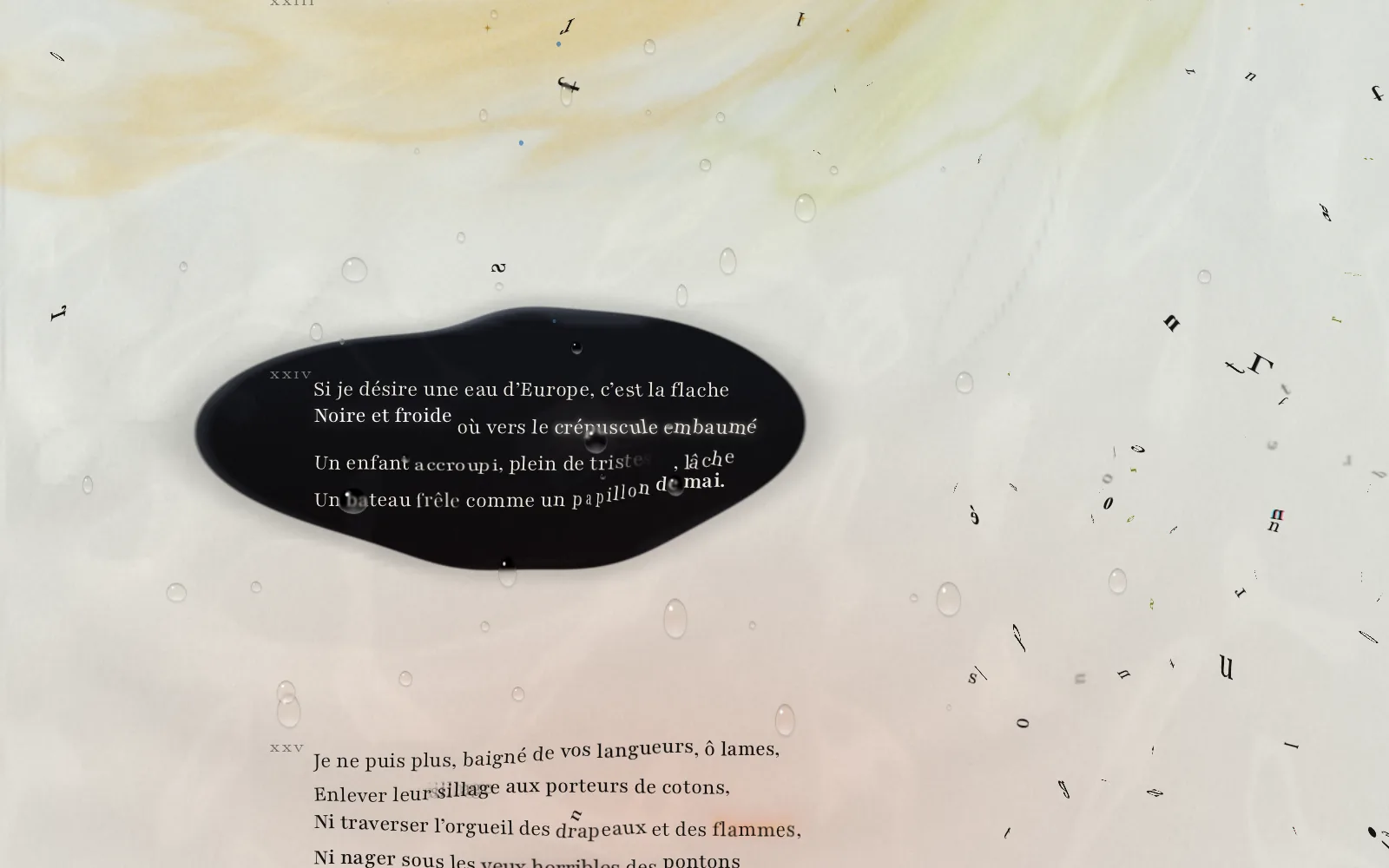
Playfair variable · WebGL sea · Three.js boat · Web Audio surf
Il pleut
Apollinaire’s calligram, as the review SIC printed it in 1916: five slanting streams of letters, rain frozen in lead type. Here the page gets wet and turns to glass, and every line becomes the trail of a single raindrop running down the window, leaving each letter exactly where the compositor placed it. Five women’s voices, made by AI, say what the water writes. The words do what they say; the town behind the glass comes into focus when it becomes an ear; after an old music the streams turn a quarter and become a staff of plainchant. Then the bonds fall, and the poem becomes rain.
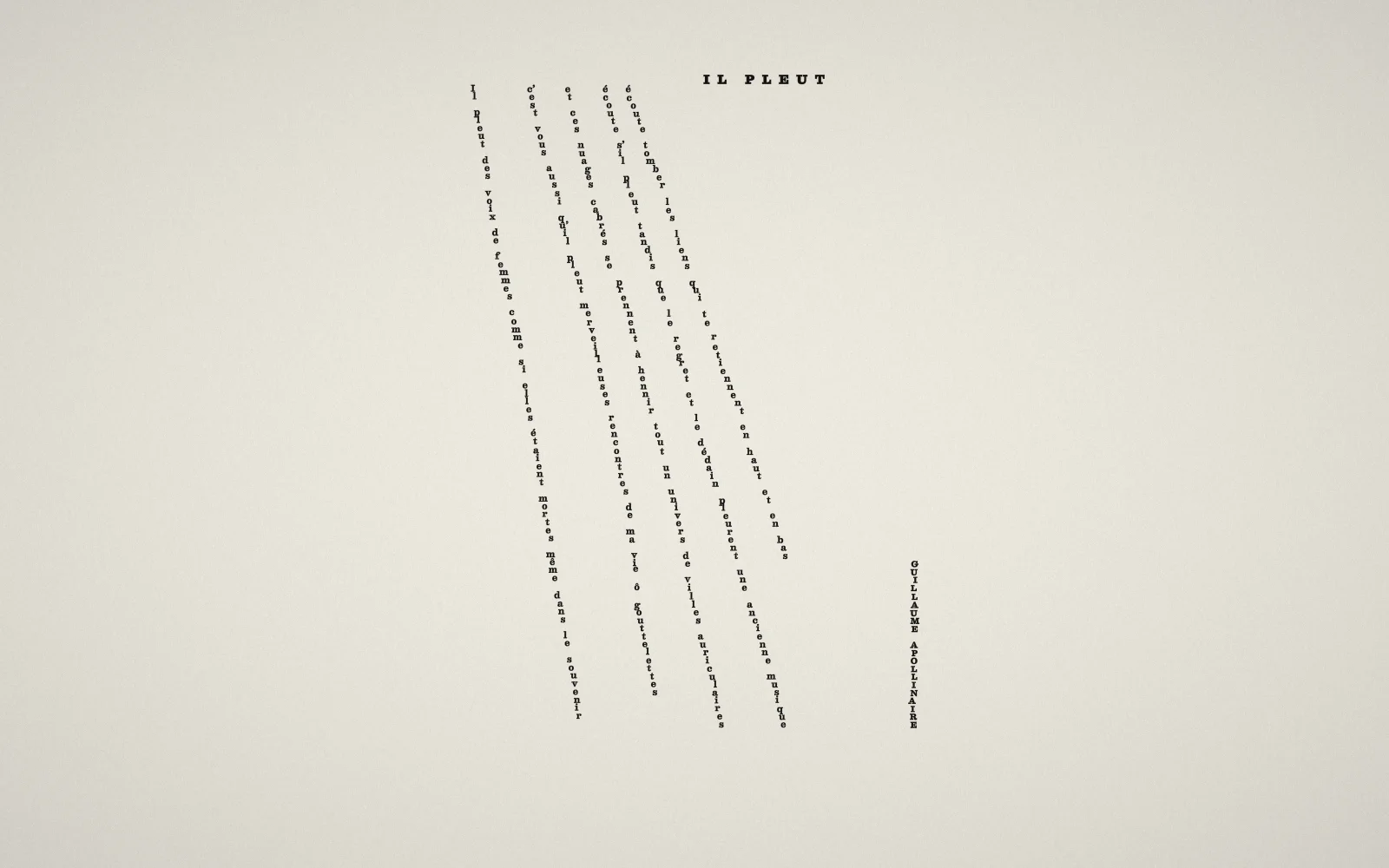
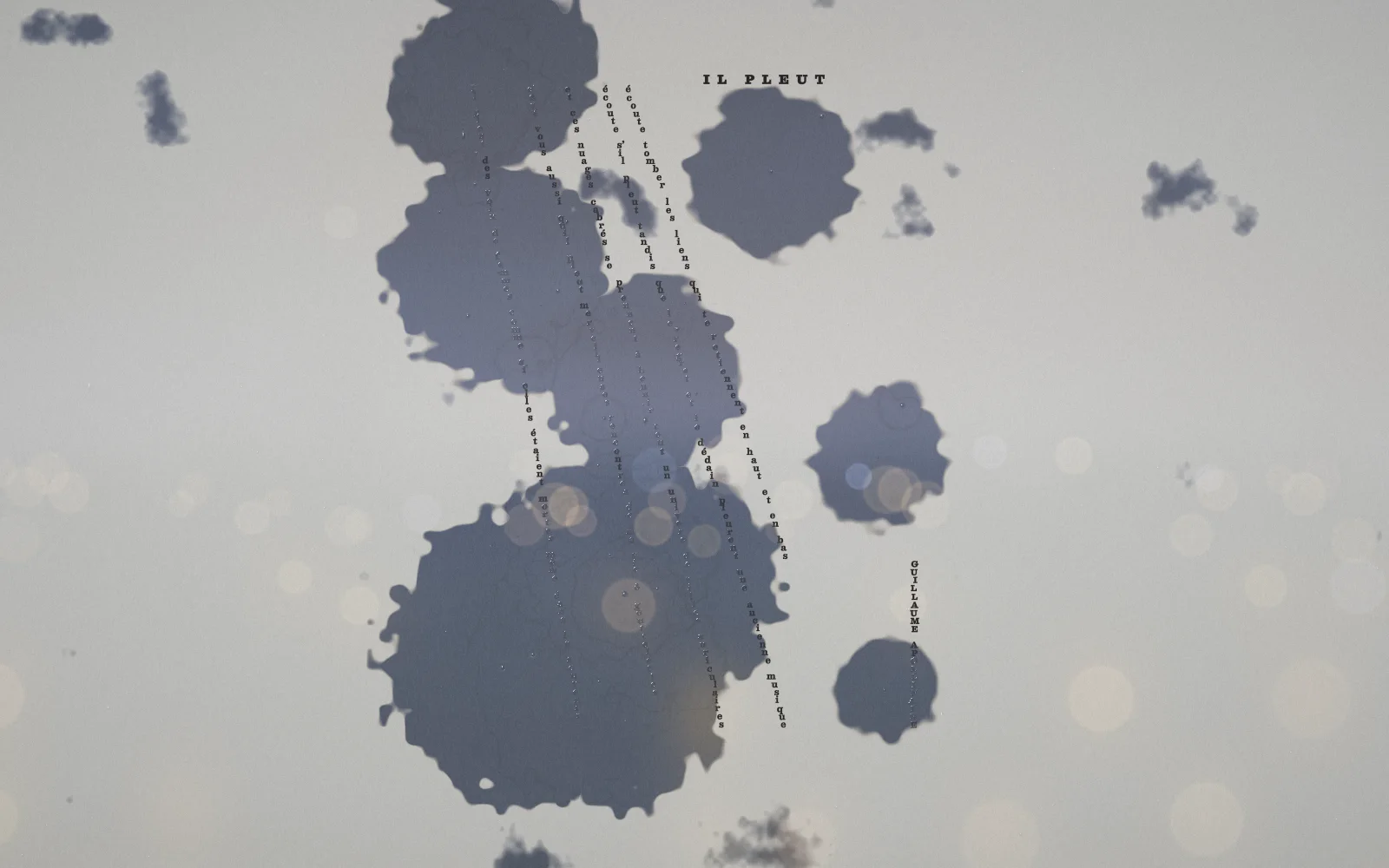
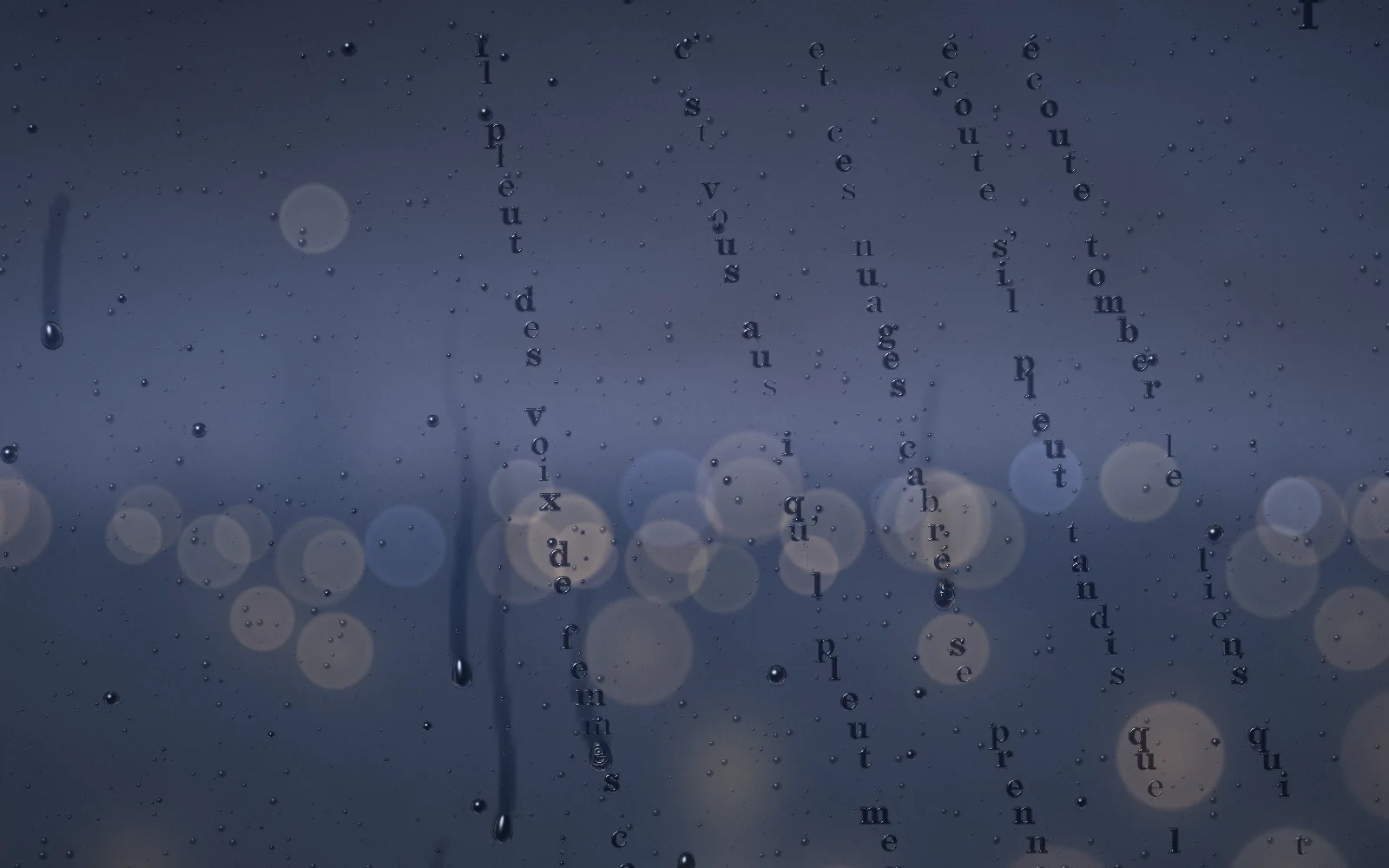
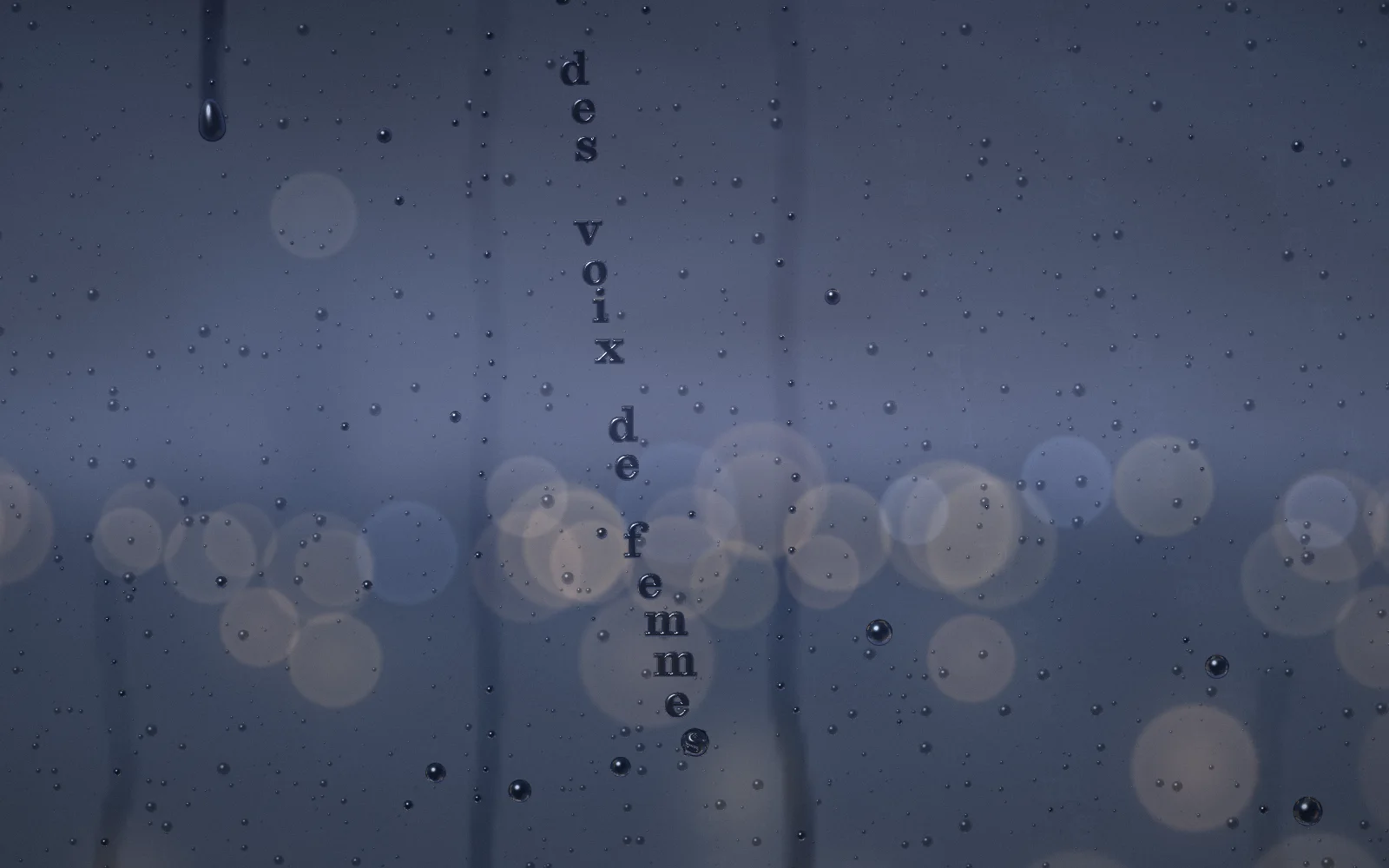
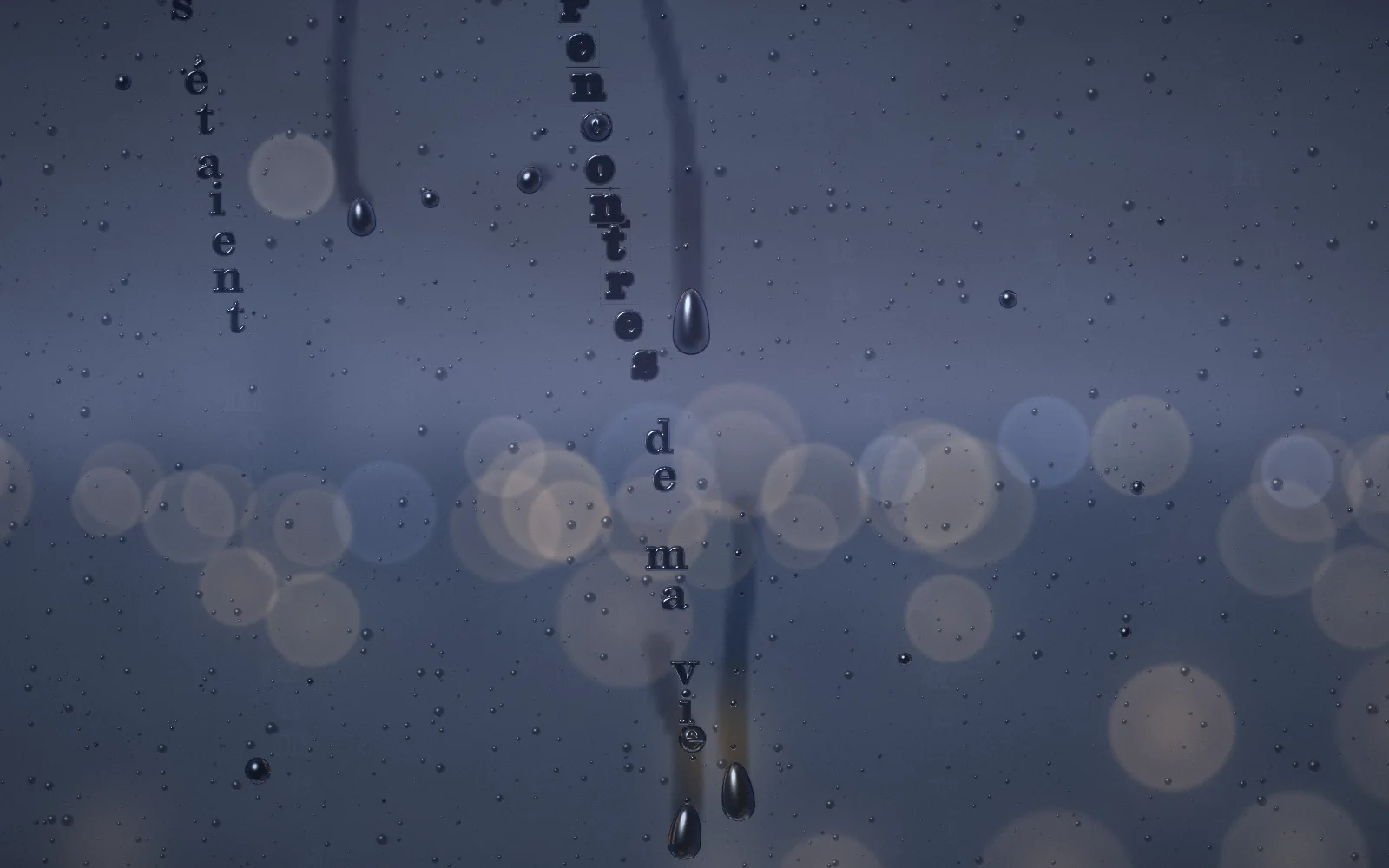
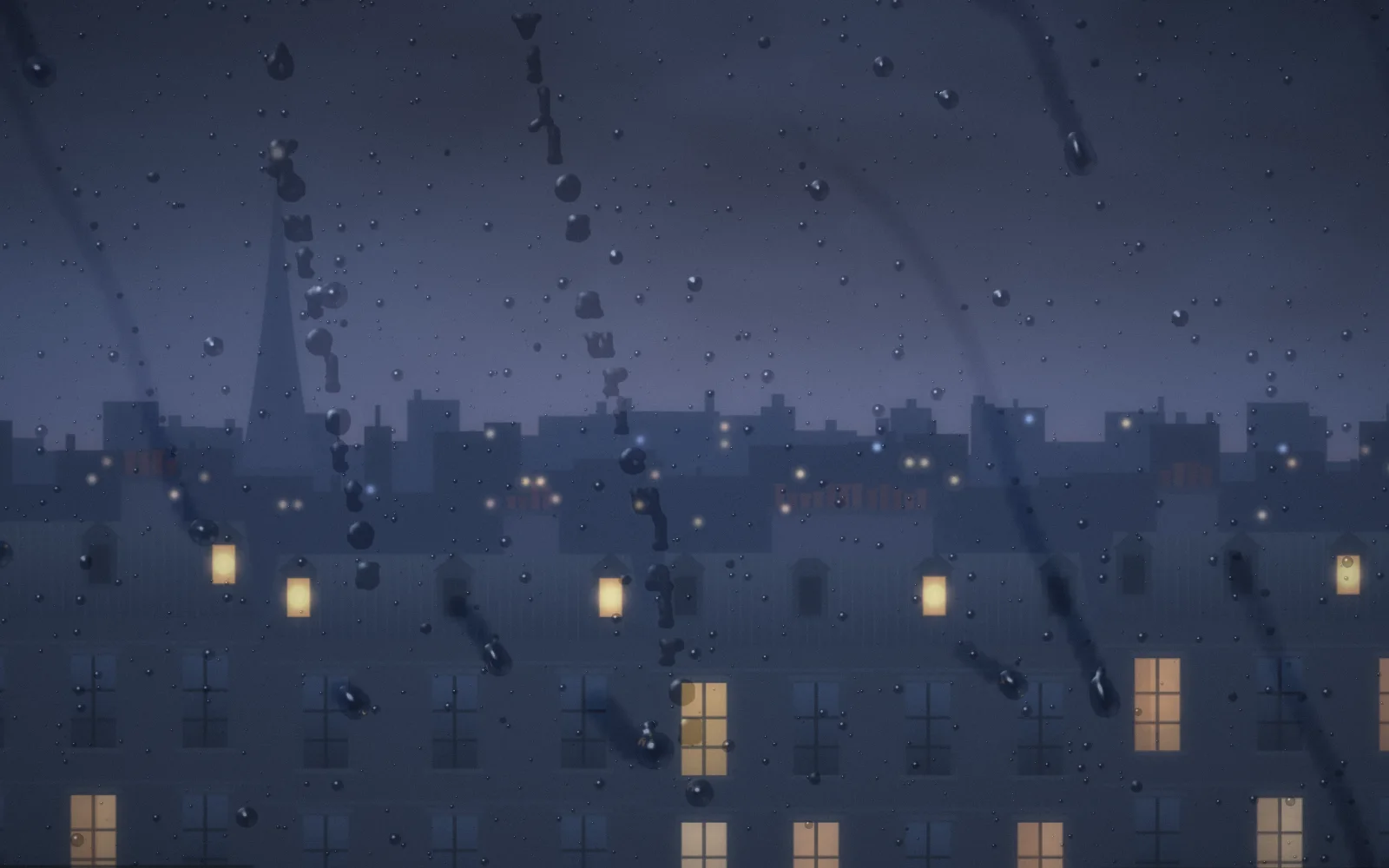
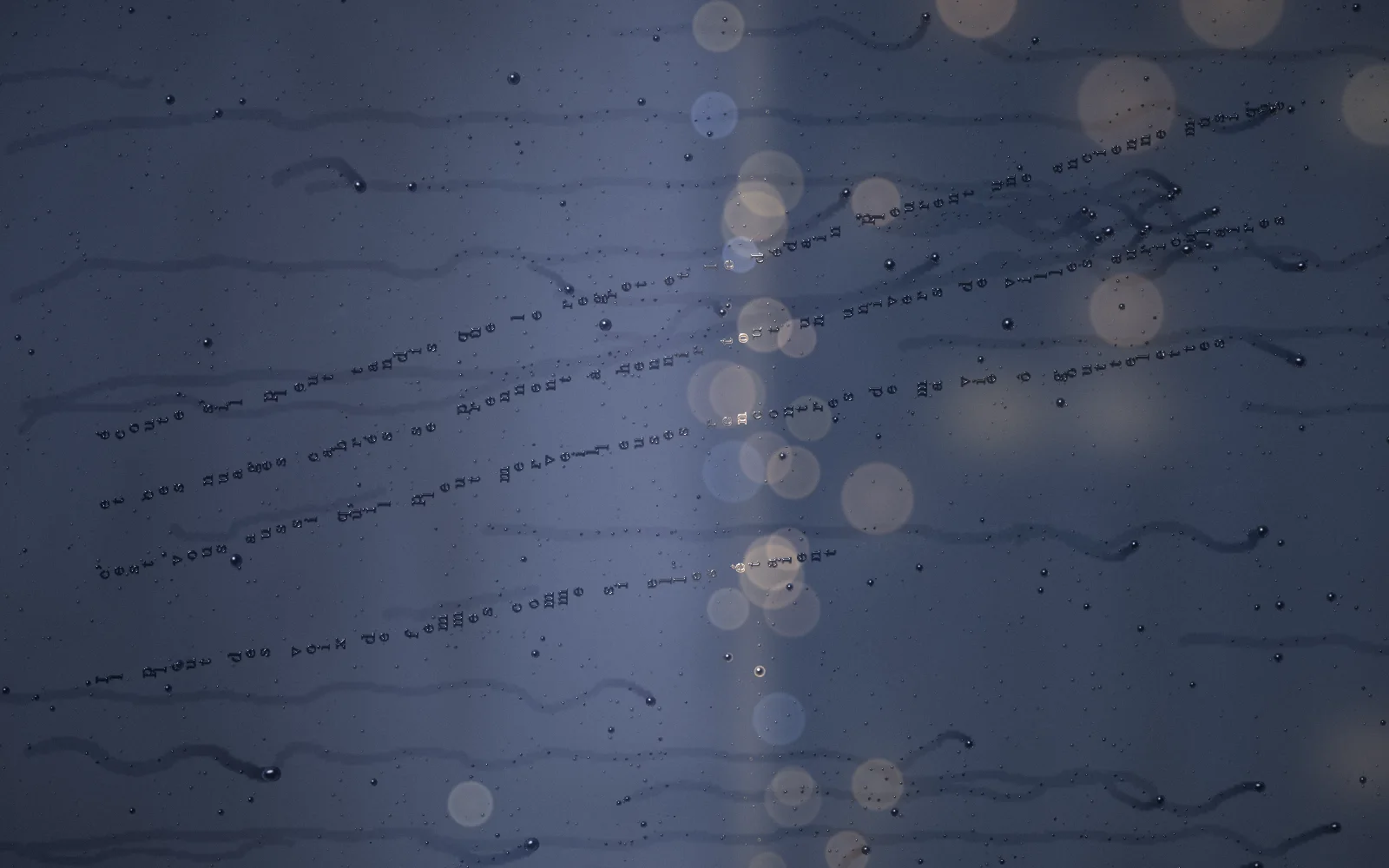
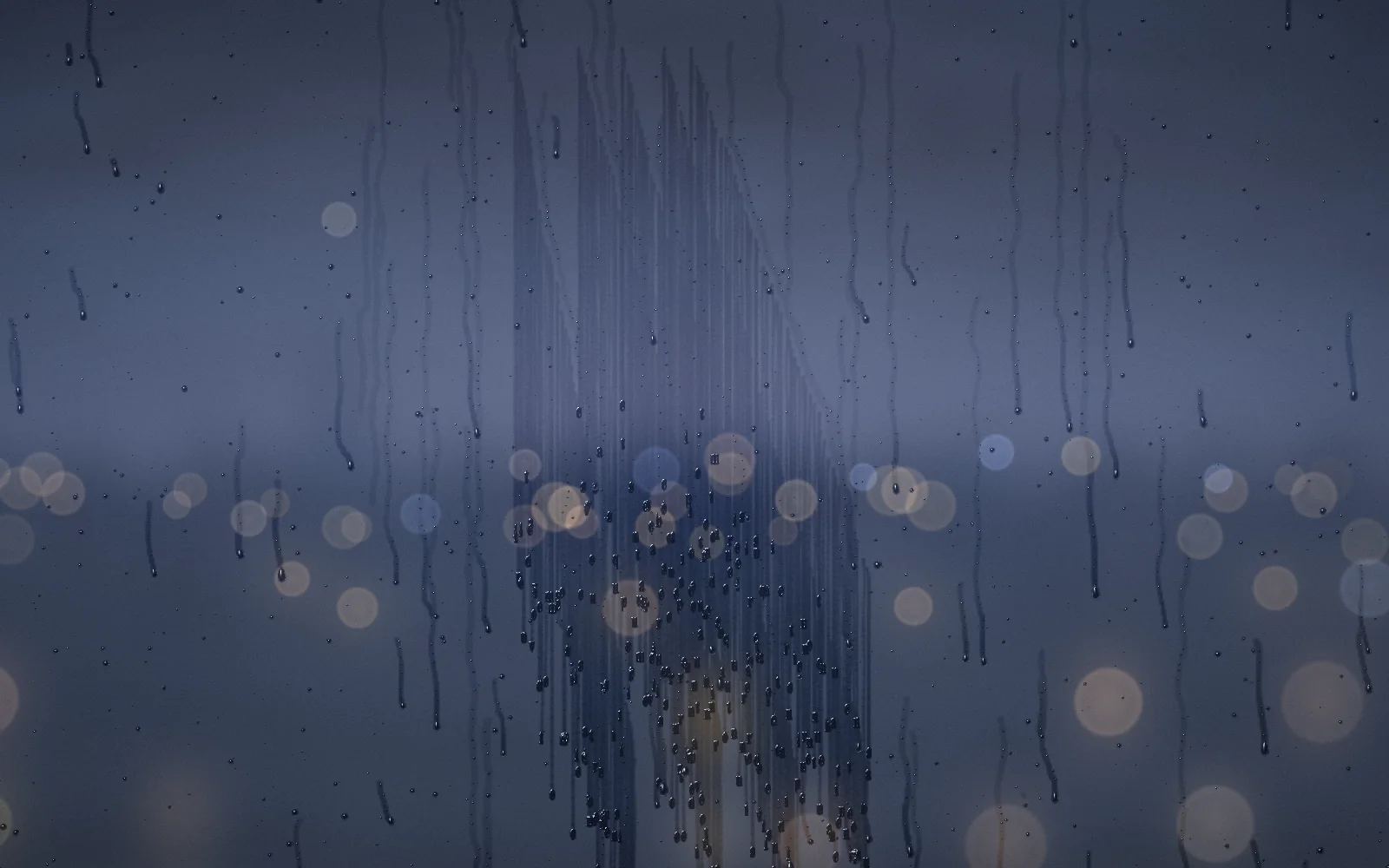
Besley · WebGL 2 water · five AI voices · plainchant
Jelly type
Type a word and each letter is cast in gummy, dropped on a studio sweep and left to tremble. The mould is the letter’s own outline: every edge it drew comes out rounded, and the jelly — tetrahedra solved sixty times a second, nearly incompressible — stretches when you pull it and swings back when you let go. Then the scalpel, the paste-up knife: draw across a letter and the blade follows the stroke, point down, handle leading, and leaves a flat, bright face where it cut. Slit an O and it holds together; cut the leg off an R and you are holding a P.
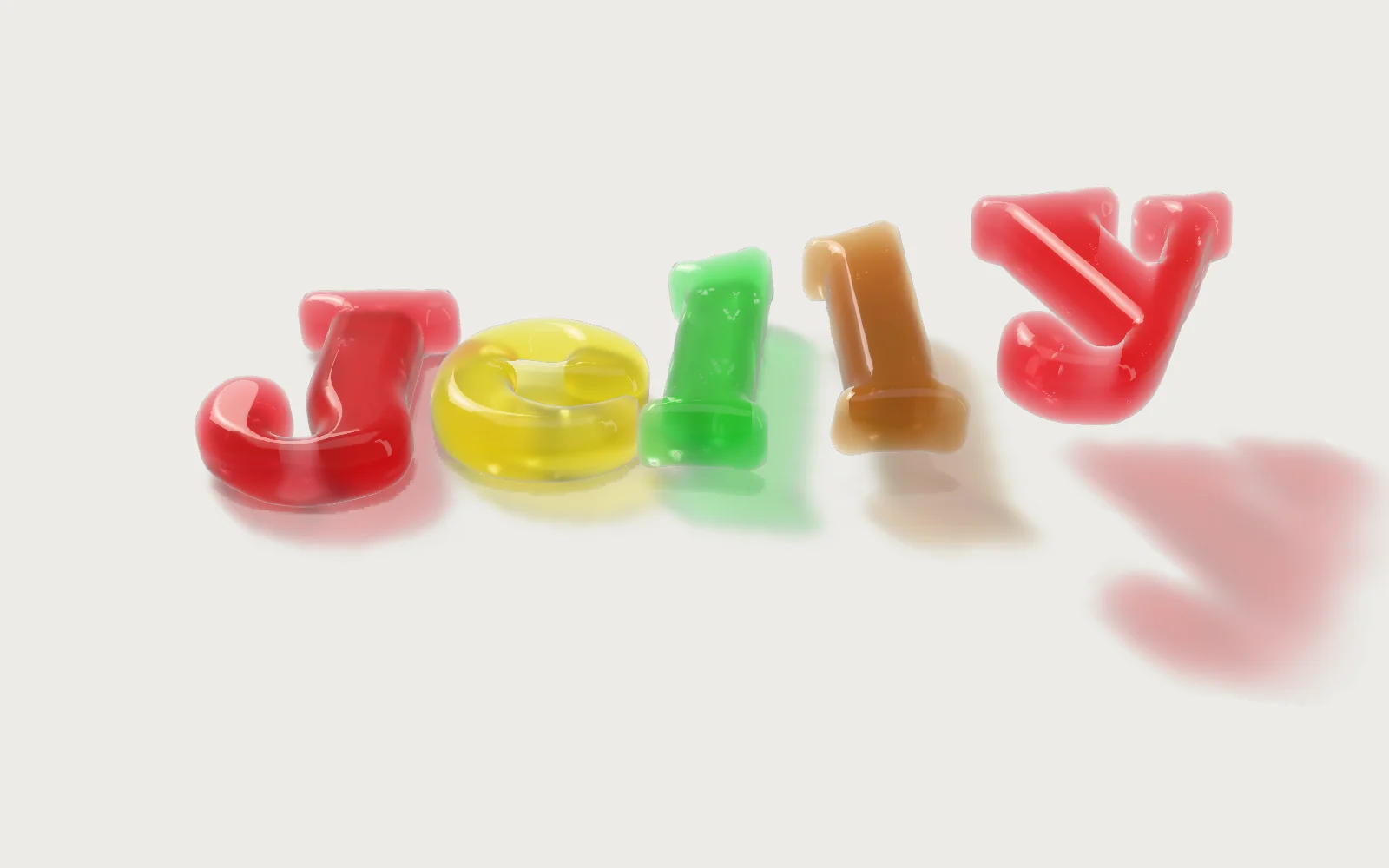
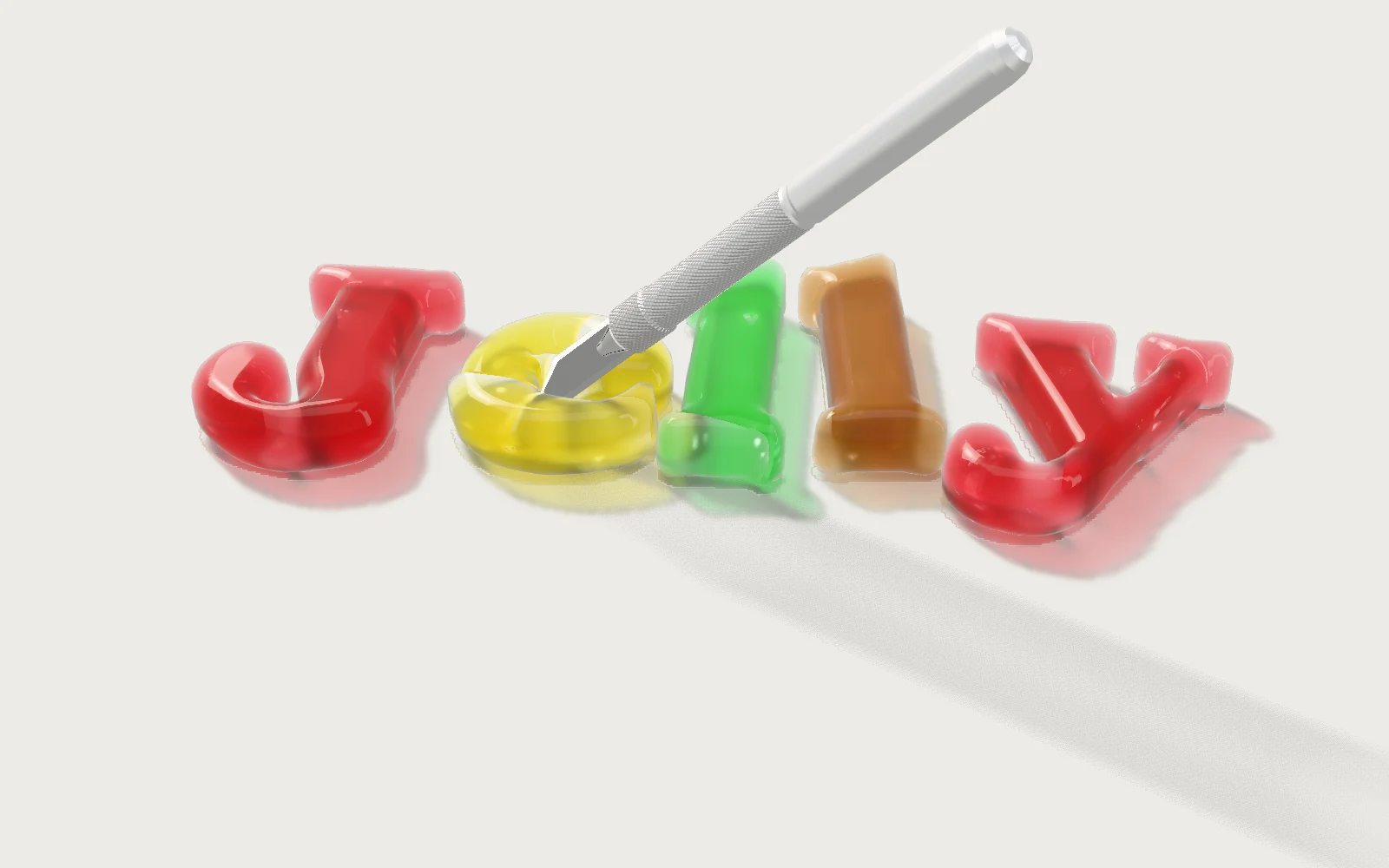
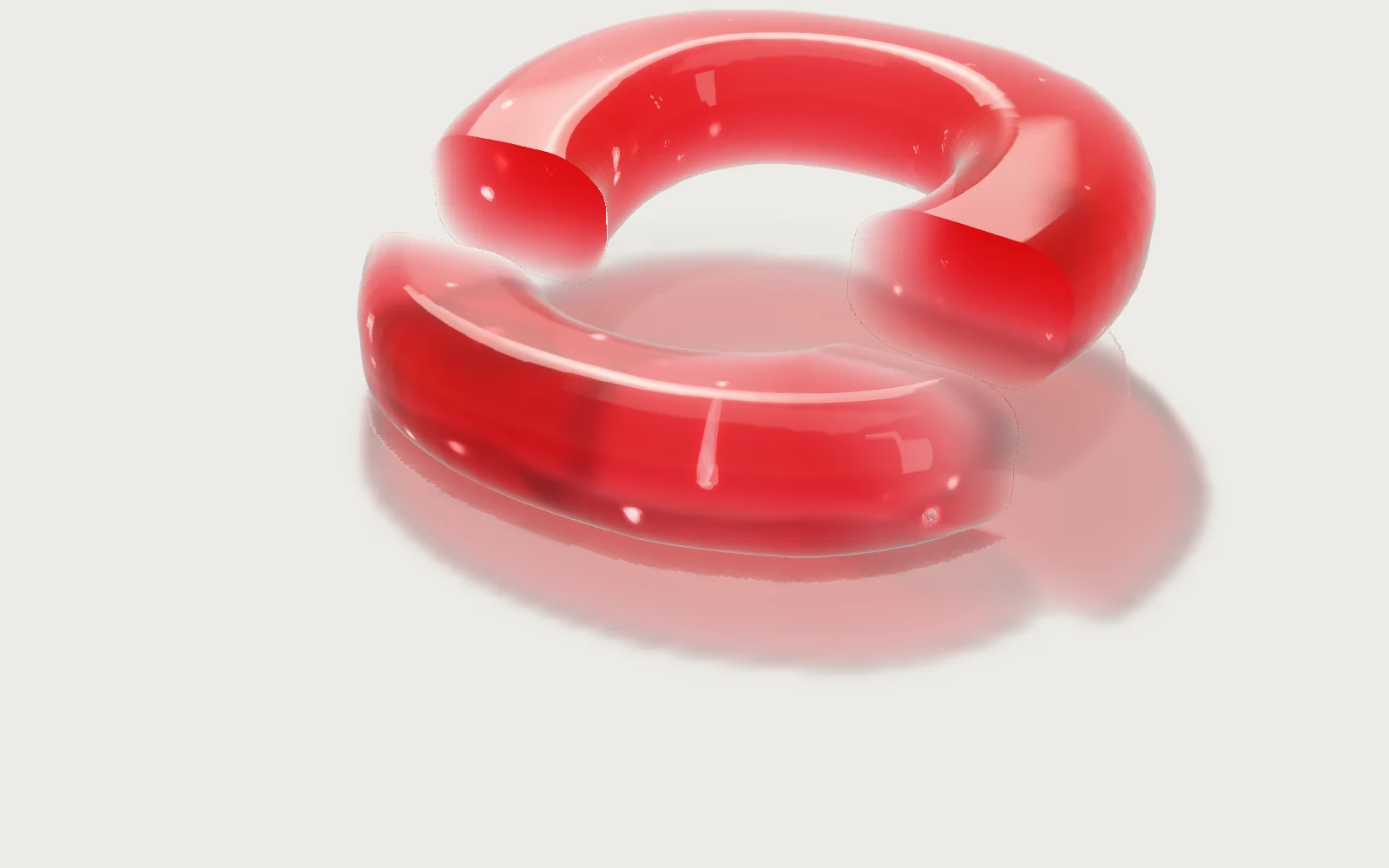
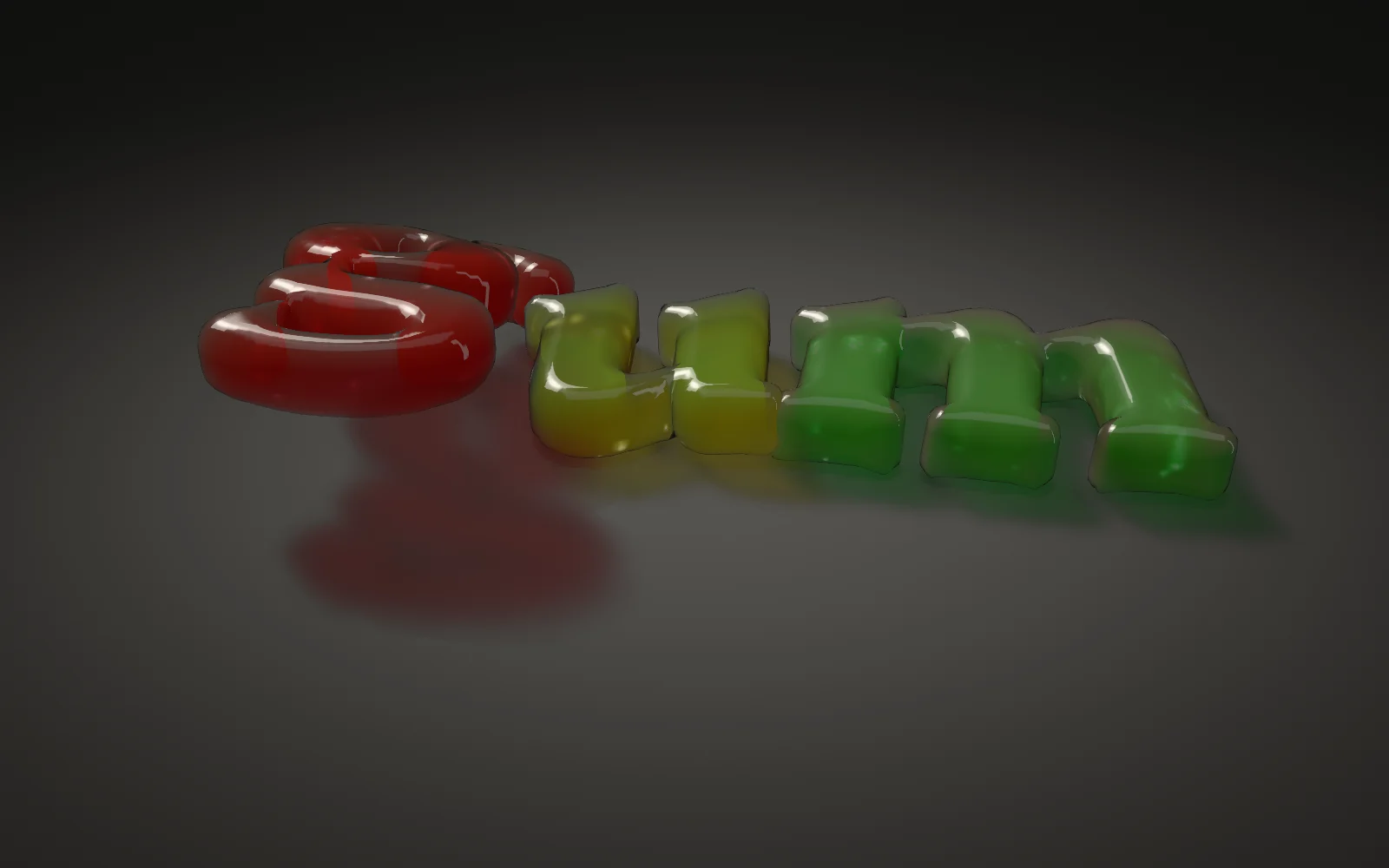
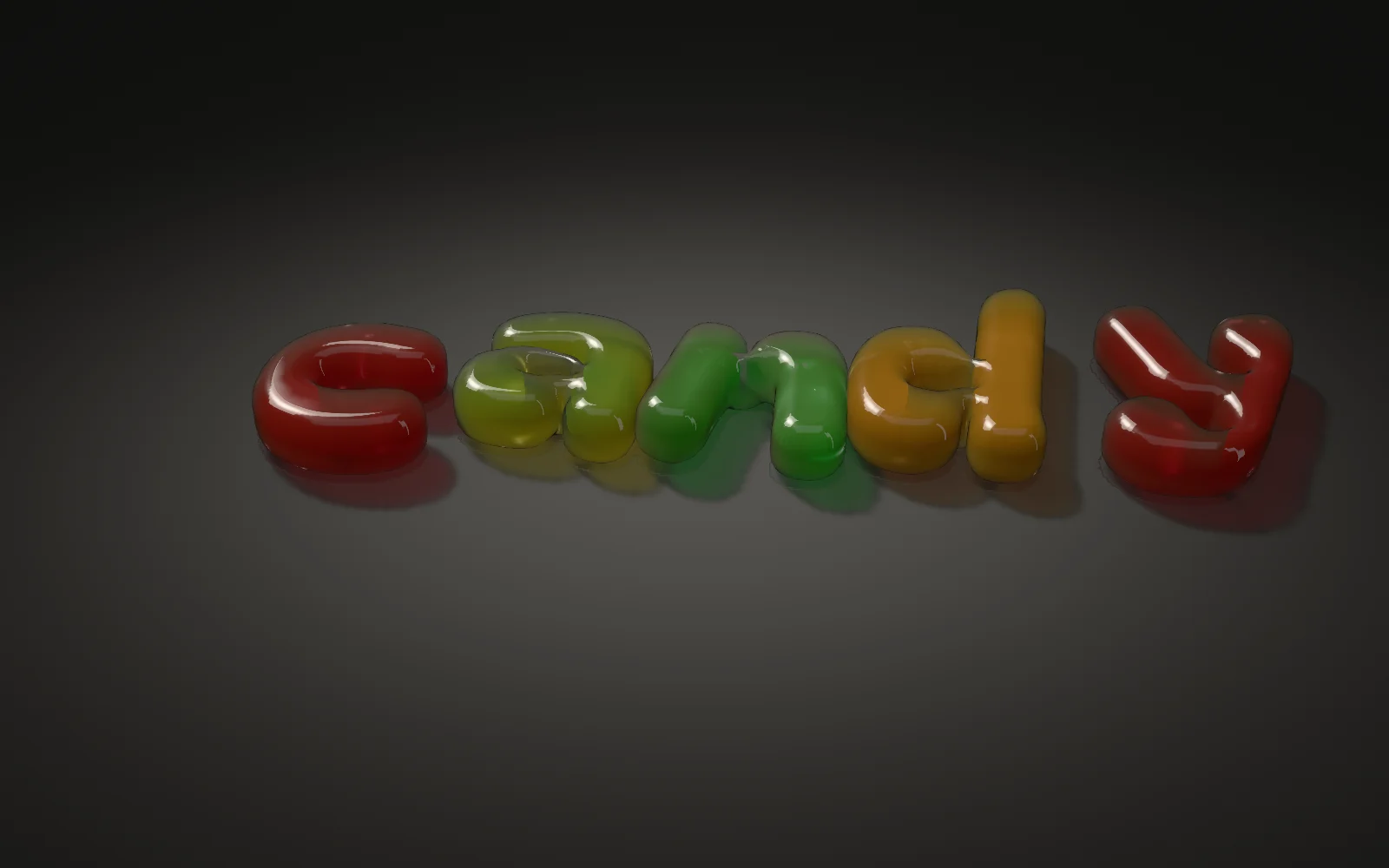
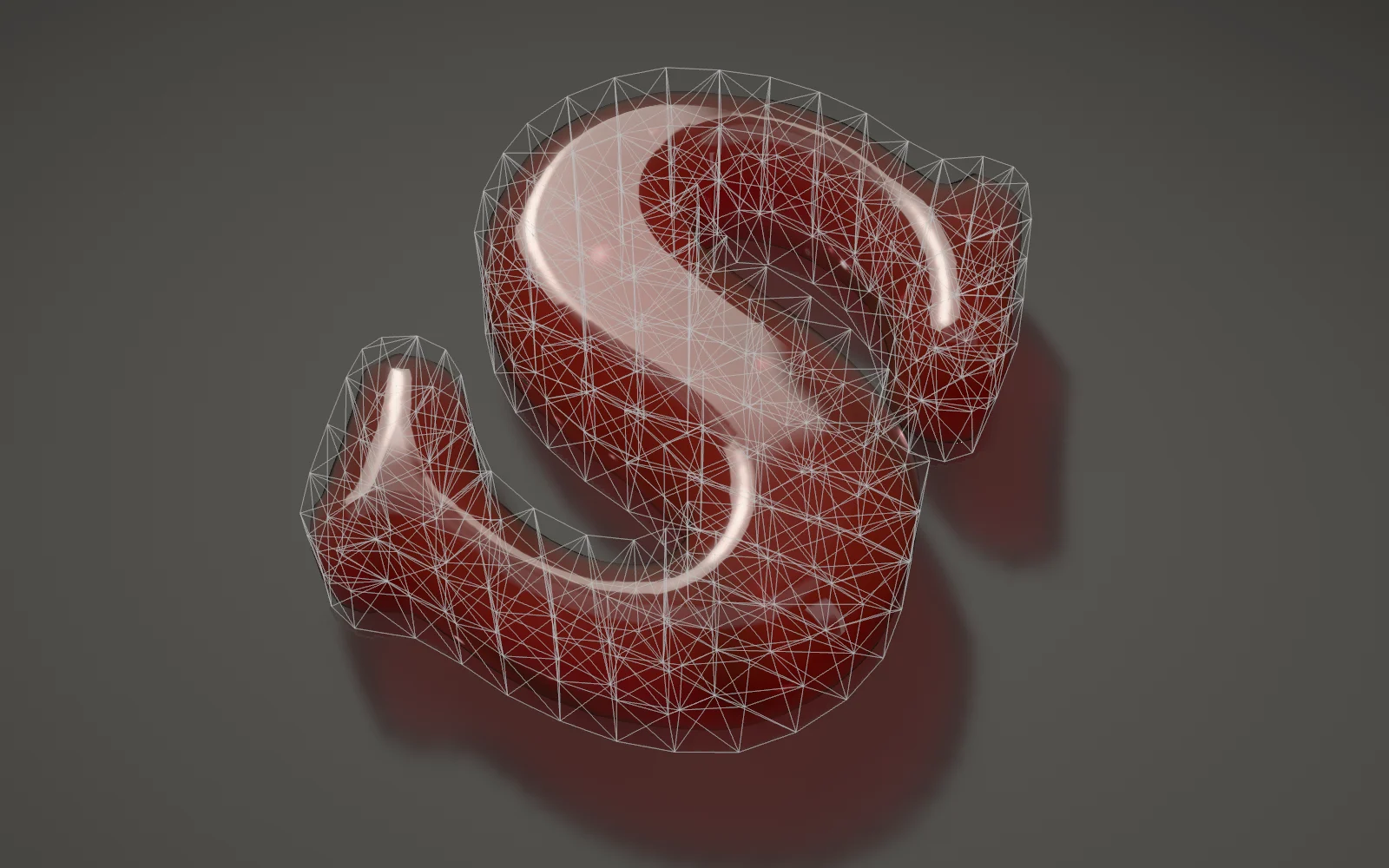
XPBD soft body · WebGL 2 jelly · three typefaces · five flavours
About
Vincent Lesne is an art director at an advertising agency. Type lab gathers his research into letterforms — mostly with AI tools, also in code, sometimes by hand.
Method
Always start from a real font, then let the machine handle it. AI writes well and draws badly: the drawing stays with the letter; material and motion go to the machine.
Typesetting
Set in Mona Sans (GitHub, SIL OFL), across every width and weight, and IBM Plex Mono. The title is read from the font file with opentype.js and redrawn every frame. Two modes, because a letter can’t be judged on one background alone.